
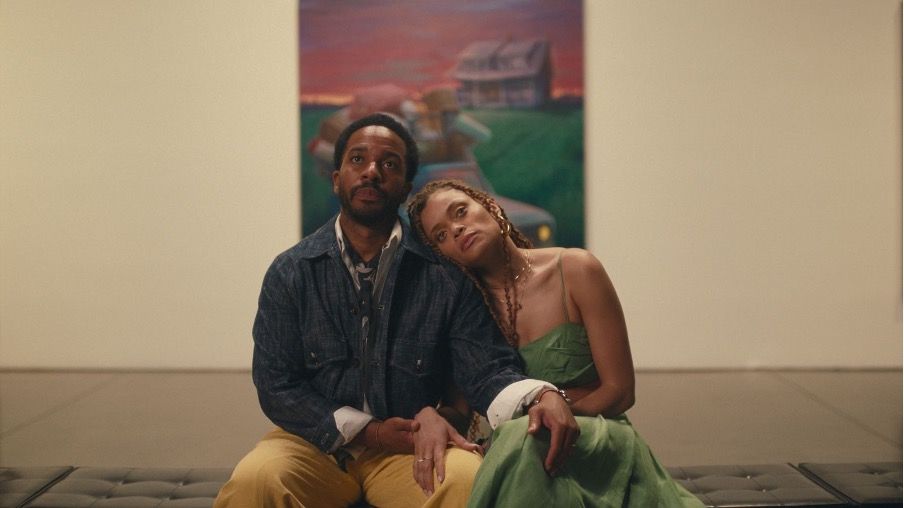
Exhibiting Forgiveness—the directorial debut by the evocative visual artist Titus Kaphar1—has a lot to say. Both the director and the work itself tell us trauma can be passed on, much like a genetic disease. Yet, it also illustrates how art, as an expression of emotion, can bend toward healing. In this thematic film, we find forgiveness at the intersection of self-expression and unflinching memory—where we learn our past pains are not built for forever.
The story revolves around Tarrell (André Holland), a successful American painter struggling with the return of his estranged father, La’Ron (John Earl Jelks). Although we, as the audience, and Tarrell’s wife (Andra Day) know La’Ron’s impact has never left. It’s there when Tarrell has nightmares and wakes up choking, as though there are hands around his throat. His mother, Joyce (Aunjanue Ellis-Taylor) believes in biblical absolution, but we realize it isn’t her ex she seeks to save, but her son.


Holland, Jelks, and Ellis-Taylor form a powerful trifecta. The story of their family hurts because it is real and recognizable, refusing to hide behind the excuses we make or the pain it causes. The cast, including Day and Ian Foreman as a young Tarrell, embodies the term “family dynamics” with emphasis on dynamism; while Kaphar imbues Exhibiting Forgiveness with the same energy and colors of extraordinary life in ordinary places that live in his artwork. There’s visual poetry in the scenes where Young Tarrell pushes Grown Tarrell’s paintings into frame, overlapping real places, reminding his older self his art blooms out of his experiences—who he was, who he is, who he is becoming.
“That painting is about me trying to keep the past from sneaking up behind me.”
Exhibiting Forgiveness2 is bitter medicine, a meditation on healing that confronts the past without condoning it. The characters portrayed by Holland, Day, Ellis-Taylor, Jelks, and Foreman are alive in this film, but, just like the deep lingering ache after a vaccine, their walk toward wellness hurts.

