
The movies—as an art form—have more power than the superhero genre. They can elicit emotion, inspire, frighten, or educate. They have the ability to revise history or overwrite misinformation. The movies are strong.
Yet those same movies can erase your culture, vilify your people, or rewrite you into a cliche. If you want proof, watch the most influential films from any era. That’s where you’ll see BIPOC / ALAANA (African, Latine, Arab, Asian, or Native American) people waving from the margins of the script.
This is why representation matters. It’s not just a slogan, it’s vital. The need to be seen as valued & varied—as much as those who usually play the heroes—is a form of starvation. I often think about something filmmaker Christine Vachon said during one The Hollywood Reporter Roundtables, “It is humiliating to have to explain your value.” Yet that is what traditionally-marginalized people have done in every art form except for blockbuster movies—until recently. Ain’t no blockbuster like the sensational scale of a superhero spectacle. So when BIPOC / ALAANA people applaud Black Panther or Shang-Chi, and now for Blue Beetle, we’re making a big noise because the hunger is being fed.

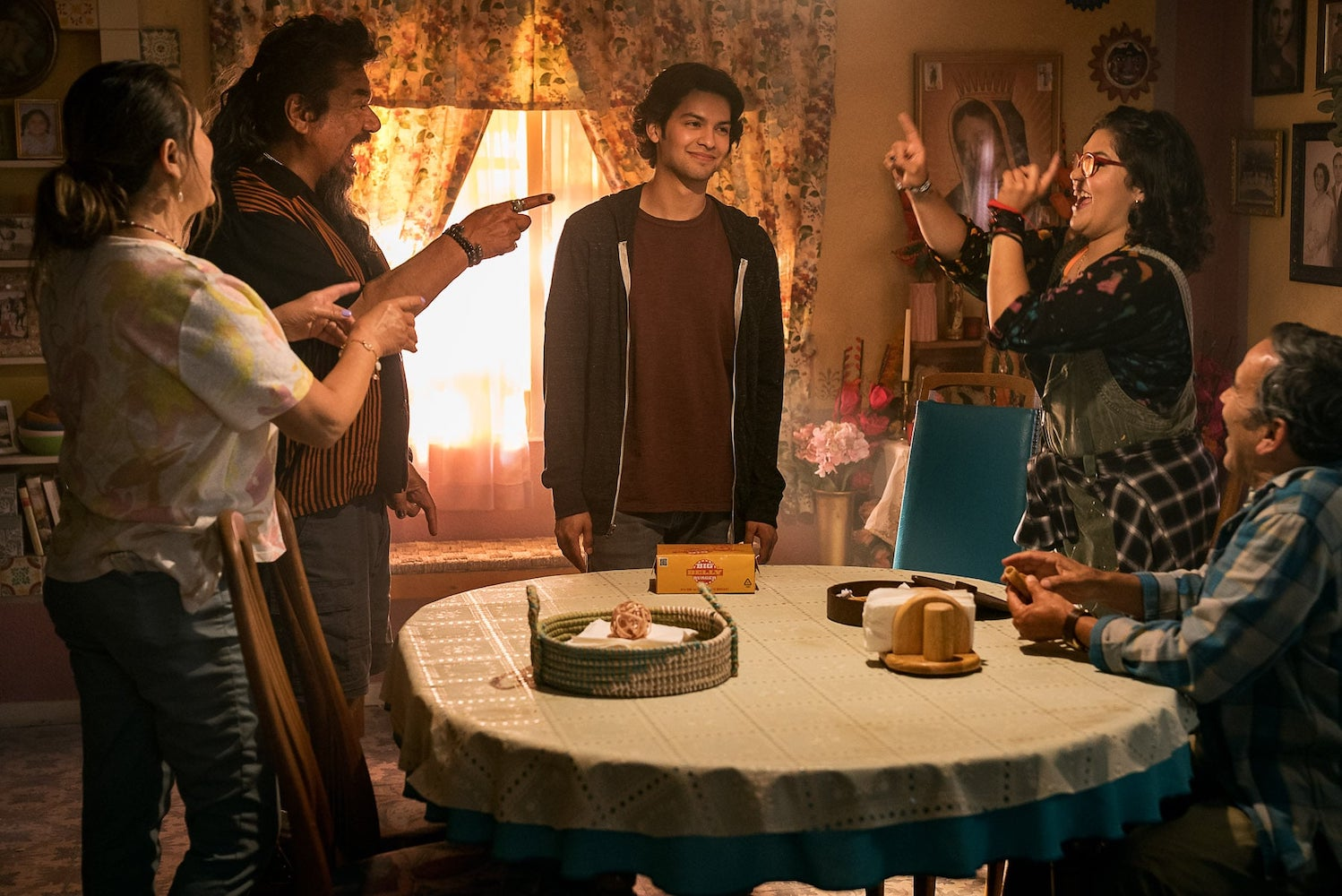
Blue Beetle, the adaptation of the DC Comics hero, officially lands in theaters tomorrow. It’s a good movie to see because it’s fun and it’s about family, but also because of everything you’ve read up until this point. Director Ángel Manuel Soto and writer Gareth Dunnet-Alcocer explore how fraught achieving the American dream can be for Mexican-American families, especially with undocumented loved ones. It’s not a teary movie (for the most part). Blue Beetle is a big-energy adventure that’s made for multiple generations to enjoy, but it also reflects the corazón of its culture.
The communities in places like Miami, Los Angeles, and Columbia Heights are here. The love inside extended families is evident. Cultures that cannot be diluted represent. The refusal to learn Latine names is present, and the history of violence that many migrant South American bodies carry is here too.

I watched this story, that straddles where the DCEU (DC Extended Universe) was and where it is going, in a screening filled with fans and critics—the theater buzzed. First of all, the women in Blue Beetle stole it, they draped it around their necks like jewelry, and let it shine like a diamond. From Milagro (Belissa Escobedo) to Jenny (Bruna Marquezine), Amá (Elpidia Carrillo) to Nana (Adriana Barraza), to the voice of Becky G as Khaji-Da (the Scarab herself). These women are easy to love and they earn our respect. Likewise, our lead Xolo Maridueña is everything we want from the Jaime Reyes/Blue Beetle character. His charisma is a chain reaction. James Gunn and Peter Safran need him as a star in their reboot of the DC cinematic universe for Warner Bros Discovery.
The entire cast is a delight, but that’s not what got me. It is the representation of Mexicans, Mexican-Americans, and other South Americans like Brazilians and Guatemalans. It is the richness of who they are as people and the refusal to be intimidated. I thought about people in my life: My three Brazilian god-daughters, my beloved sister-friend Adriana and her family from Panama, Roberto my borinqueño buddy (and fellow Caribbean), my old friend Jeff and my nephew-friend Miguel—both of Peruvian heritage, my student Ever from El Salvador who is now a father passing on his traditions. Thinking of them and their families watching this movie gave me a frisson of joy; this time they get to be the superhero in a big flashy spectacle.

And that’s when I remembered something I recently learned. A previously unknown cousin found my mum on 23andMe, and just like that we found out she’s not only British and Caribbean, mum is Cuban on her father’s side. I haven’t had a chance to immerse myself in this new facet of my identity yet, but Blue Beetle reminded me who I am.
I told you. The movies are more powerful than superheroes, but when they team up with a starving audience the representation is undefeated. Movies have the power to remind us who we are, they allow us to show everyone else and to remind the world our humanity is shared.
Blue Beetle is empowered by love, family, an indomitable spirit, and the cross-pollination of American and Mexican culture. That specificity makes the story universal. Go ahead and allow Jaime Reyes to show you who you are.
