
“Tell me your journey, each of you.
Tell me your life’s voyage and I will tell you who you are.”
Whether it’s the novel by Victor LaValle or the new Apple TV+ series written and created by Kelly Marcel, The Changeling is not easy to write about. It is mercurial—as quick to overheat as it is to cool off and leave you wondering whether we got burned. As an audience, we’re meant to ponder the riddles The Changeling offers, but are there unintended themes to puzzle out too? The Changeling is a modern fairytale both Grimm and filled with glamour, but is the magic real or are we witnessing a series of shared delusions—power fantasies, mental illness, loves unmet, and violence against those we should hold dear?
So many questions. So much to see.
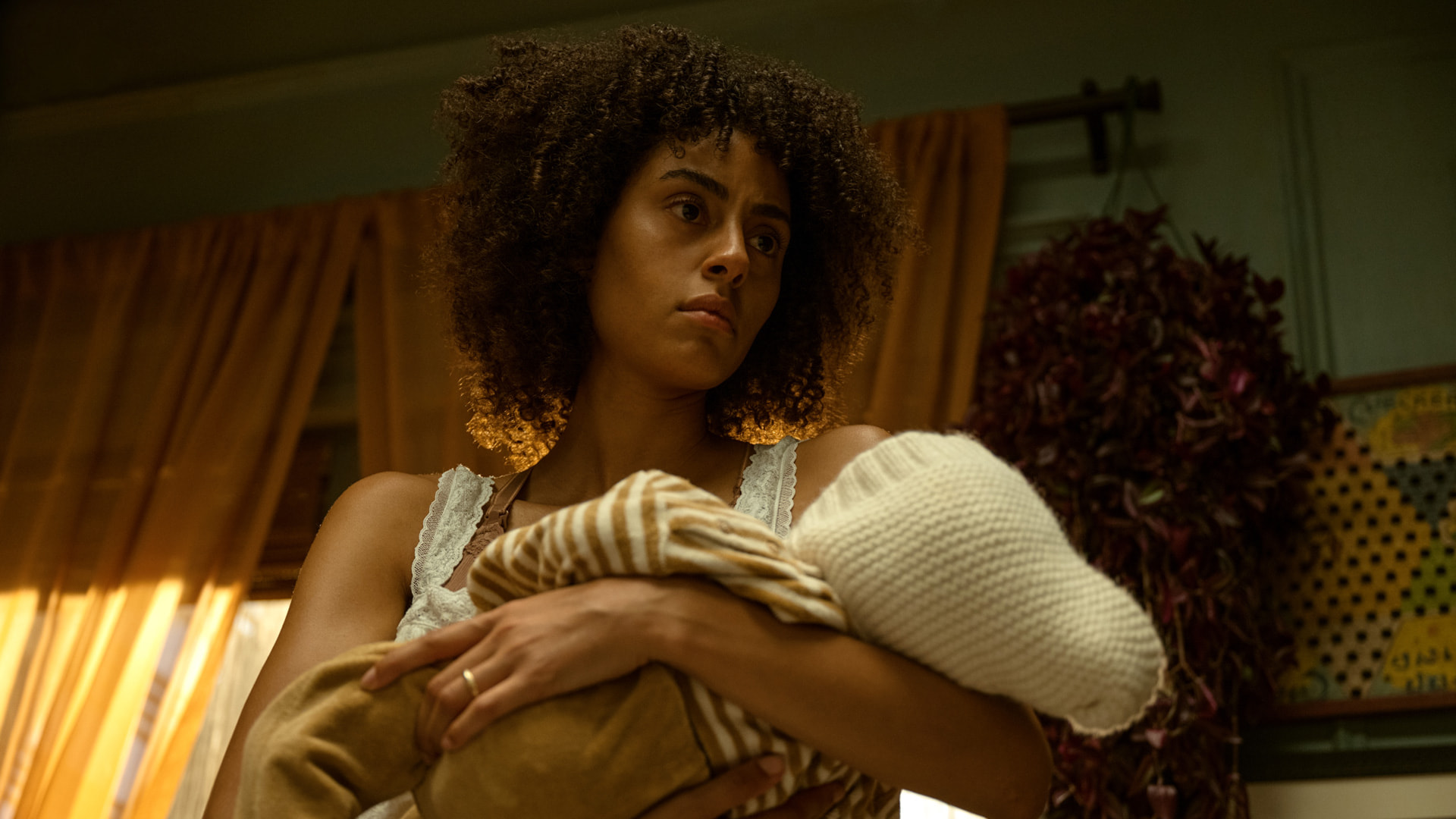
Apollo (LaKeith Stanfield) is a rare book dealer. He meets Emma (Clark Backo), a librarian, and pursues her relentlessly. She is adamant in her “no” at first. Perhaps Emma senses their fate is a premade disaster, all packaged up and ready to implode. But maybe not. They don’t know their pasts are comprised of ‘his and hers’ curses. They only recognize their affinity for one another. So, Apollo and Emma eventually get married and have a son named Brian. Because of him they are thrown into a folkloric world, where they each undertake a quest, fighting against and sometimes alongside forces that have no love for the couple or their son. A boy who may not be who he seems.

I’ve had over a month to think about it, and I’m still not sure what I want to say about The Changeling series. Liking it or not liking it seems irrelevant. Instead, I wonder if the questions it poses get answered with the same level of thrills. Unquestionably, it is beautifully shot by a team of directors, including executive producers Melina Matsoukas and Jonathan van Tulleken. Kelly Marcel’s writing is creepy and enigmatic but strangely intimate. As though you’ve had dinner with these characters before. Stanfield, Backo, Adina Porter, and Jane Kaczmarek must be a dream fulfilled in their roles. While Victor LaValle’s narration adds a ‘bedtime story in a shadowy room’ quality to the production.
Each of these erupts into a nightmarish but hypnotic series; made more potent by the horrors of the everyday: postpartum depression, gaslighting, the anxieties of new parents, and the sins of our fore-parents. Is it good? I believe it is very good. Primarily because the questions The Changeling asks are ones we need to think about: Why don’t we listen to each other? Why are women most often silenced with accusations of “crazy”? And why is parenting so hard? The fairytales and folklore, the fantastical and phantoms, make the questions more compelling while giving us enough distance from our realities to make them easier to grapple with.

Alternately, I’m not sure I’m satisfied. Perhaps The Changeling lingers too long in Apollo’s POV. Until we question whether he is our hero or the antagonist. His obsession with his own power allows him to symbolically cut off his wife’s wishes without remorse while he bellows, “I am the god Apollo.” More of Emma’s perspective might have been more fulfilling. Outside of the first two episodes, I re-engaged with the story when Emma takes over the narrative in Ep 6. After that Adina Porter’s Lillian does the same in Ep 7. With a balance between Apollo’s detective work and the opposing pull of Emma’s reasons why, the story would sing louder.
But as I said, it’s good. The Changeling is a dark and fatalistic fairytale for the people we are now and who we are becoming.
