
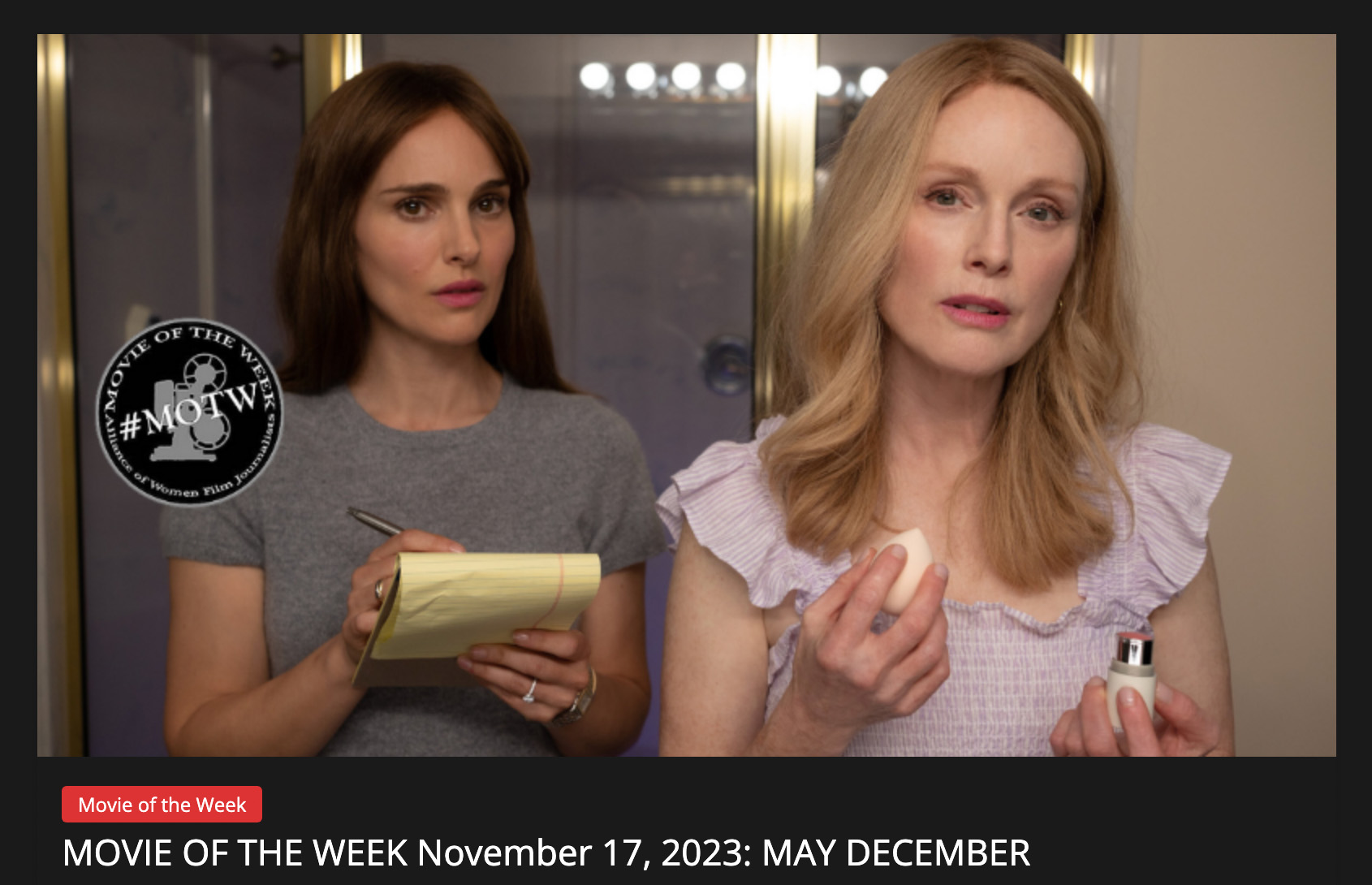
the original version of this review appears on AWFJ.org for the Movie of the Week (MOTW) Series
There are a few things I need to tell you before you watch May December, the new film from Todd Haynes, starring Julianne Moore, Natalie Portman, and Charles Melton. Imagine you’re a guest and someone is taking you to their family reunion. Right before you cross the threshold they look deeply into your eyes and say: Trust no one.
This is a suburban thriller—the plunging and frantic piano score is an alert. The music makes your heart race even when the action feels benign—IT IS NOT. The actors follow suit, signaling you should be alarmed in performances akin to badly bandaged wounds; you can sense the infection beneath the gauze—that is praise for the acting.

Written by Samy Burch, from a story by Burch and Alex Mechanik, the film is more unsettling because it is true. Based on the many teachers who sexually preyed on their middle school students, especially the sickening case of Mary Kay Letourneau and Vili Fualaau, May December posits what would happen years later when Hollywood comes calling. Moore’s Gracie has been married to Melton’s Joe long enough to have a child in college and two more graduating high school. Portman’s Elizabeth is a famous method actress who visits them to get to know the inspiration behind her upcoming role.
What ensues is a duel between two women with unclear motives and serious pathologies. Elizabeth is ravenous in her need for adoration, while Gracie is practiced at verbal programming. The level of manipulation is stunning and so well written you’re not sure it’s there—a prime marker of the abuse infusing the story. As a counterpoint, Joe’s state of being is paralleled by the Monarch butterflies he raises. As we watch his caterpillars transform, we realize they represent a plea for freedom that may never be answered. That is what is so unsettling. Our compassion for Joe doesn’t erase the knowledge that Gracie may also be a victim. Although she cannot be forgiven for spreading the disease of SA and trauma.

Meanwhile, Elizabeth becomes increasingly unsavory in her pursuit of what she calls “the truth.” We as the audience feel as trapped as Joe and the children. But at least the kids can escape to college. Joe, the man who was never a boy, is left in a state of arrested development and he knows it. Even at the end of the 2-hour runtime, you feel as stuck as he is.
May December could easily be classified as horror. I was horrified, you likely will be too.
The title of the film is a play on words, referencing the colloquialism “May-December romance.” The word romance is missing because it doesn’t exist here. What we walk away with is the understanding that past wrongs can be inherited as seamlessly as hereditary diseases. And sometimes “the truth” isn’t the medicine we hope for.
