
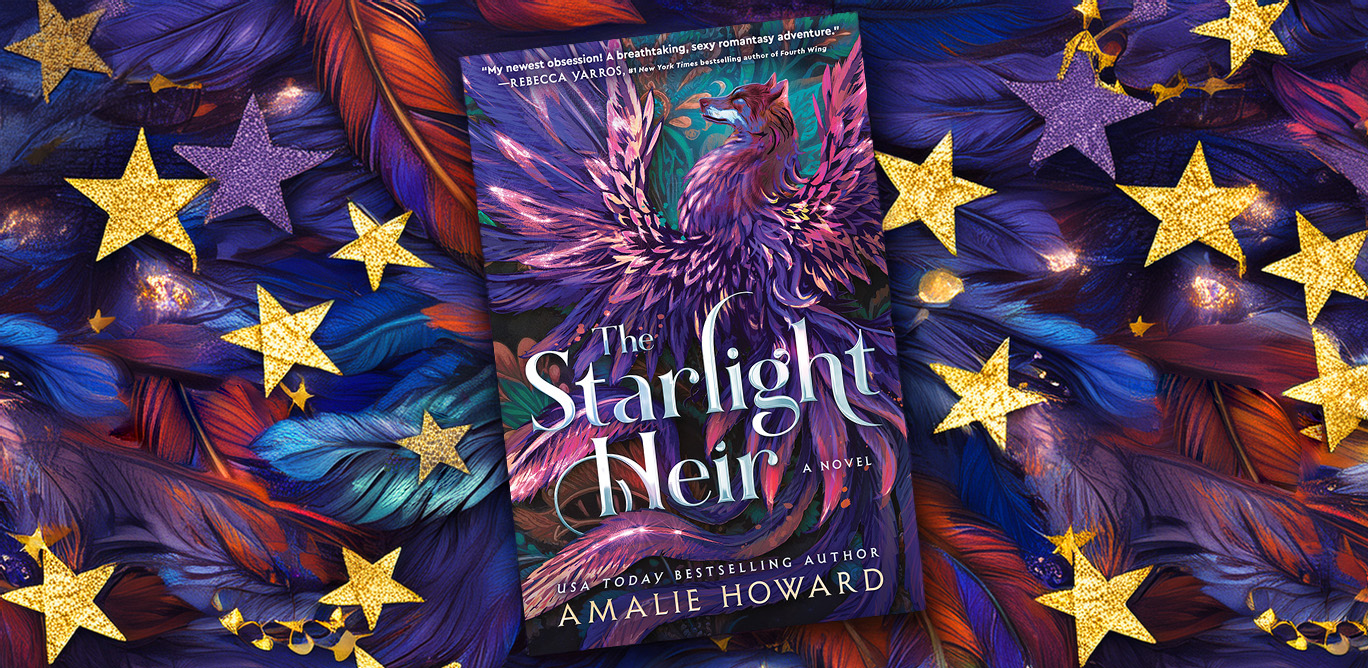
The world of Amalie Howard‘s The Starlight Heir is whimsical but treacherous—combining the romance of a fairytale with the political intrigues of an epic fantasy. Within that mix, we start out as Cinderella at a deadly ball, we fight as Gladiators in the ring, and we Revolt in a quest for goodness. Each of those adventures incited by the gods and a love written by fate.
The Starlight Heir opens in familiar territory for YA romantasy readers. Suraya Saab, a talented bladesmith, receives a golden invitation to the royal court. That’s where she’ll compete to be chosen as the Crown Prince’s bride. She feels like a lucky girl, although she has no hopes of being the chosen one, but hidden beneath the glitter is a contest that’s more Squid Game than Bridgerton. Suraya must fight or be killed; by the other girls, by the royals, or by mythic monsters. Her growing attraction to a gardener in disguise, Roshan, might kill her too—but only because it’s so flame-inducing. What scares Suraya most is the awakening power inside her that rivals the gods of an ancient zodiac.
Propelled into a battle between warring factions, both new and old, Suraya and Roshan will either learn to trust each other or die trying. Either way, they cannot escape the royals, a group of revolutionaries known as the Dhaka, or the prophecies that rule a bloody thirst for power. That’s where the second act escalates into a magical coming-of-age adventure with lots of saucy talk and spicy entanglements mingled with the risks of total ruin.
Amalie Howard is amazing at refreshing popular genres with cultural aspects that speak to a range of readers. Set in a world enriched by Indian, Persian, and Caribbean mythology, The Starlight Heir offers a vividly imagined universe. The world-building—especially her incorporation of astrology, celestial bodies, and birth charts—adds to the lore and keeps readers intrigued to learn more about the magic system.

Although everything I’ve said works in the book’s favor, I wasn’t connected to Suraya as my hero. I knew her thoughts and emotional turmoil throughout the story, but I never felt immersed in who she is. Almost like I was skimming the surface of someone I was meant to know well. She’s a blacksmith, but that doesn’t come into play much. Roshan makes her want to find the nearest bed and tumble into it, but she mostly talks about his looks and teases with double entendres. She also reads young, younger than 25.
My hesitations with Suraya echo my thoughts on the story. The opening resembled many of the YA romantacies I’ve read recently, while the action and twists in the second half were well-plotted but didn’t give me that breathless feeling I crave. However, the lore, the mythical and fantastical cryptids, and the gods’ backstories have me primed to read the next book.
One of the book’s strengths is its exploration of themes like duty versus desire and self-discovery versus predetermined destiny. Howard sets these against a larger cosmic conflict that makes me wish I had a compendium exploring the history of her gods. However, the central romance with Roshan plays out more like a crush, with doubtful trust issues contrasted by grand gestures of sacrifice. I just wanted more depth from their love in between.
Still, while the story occasionally relies on its familiar tropes, it also shines in its imagination and thematic framing. The Starlight Heir is a novel that embraces culture, complexity, and the cruelty of greed—delivering a multifaceted tale where women and girls dare to reshape the world based on the shapes of their hearts.
The Starlight Heir is ready for your bookshelves both real and digital today
Fantasy / Romance | Romance / Fantasy | Fantasy / Action & Adventure
