
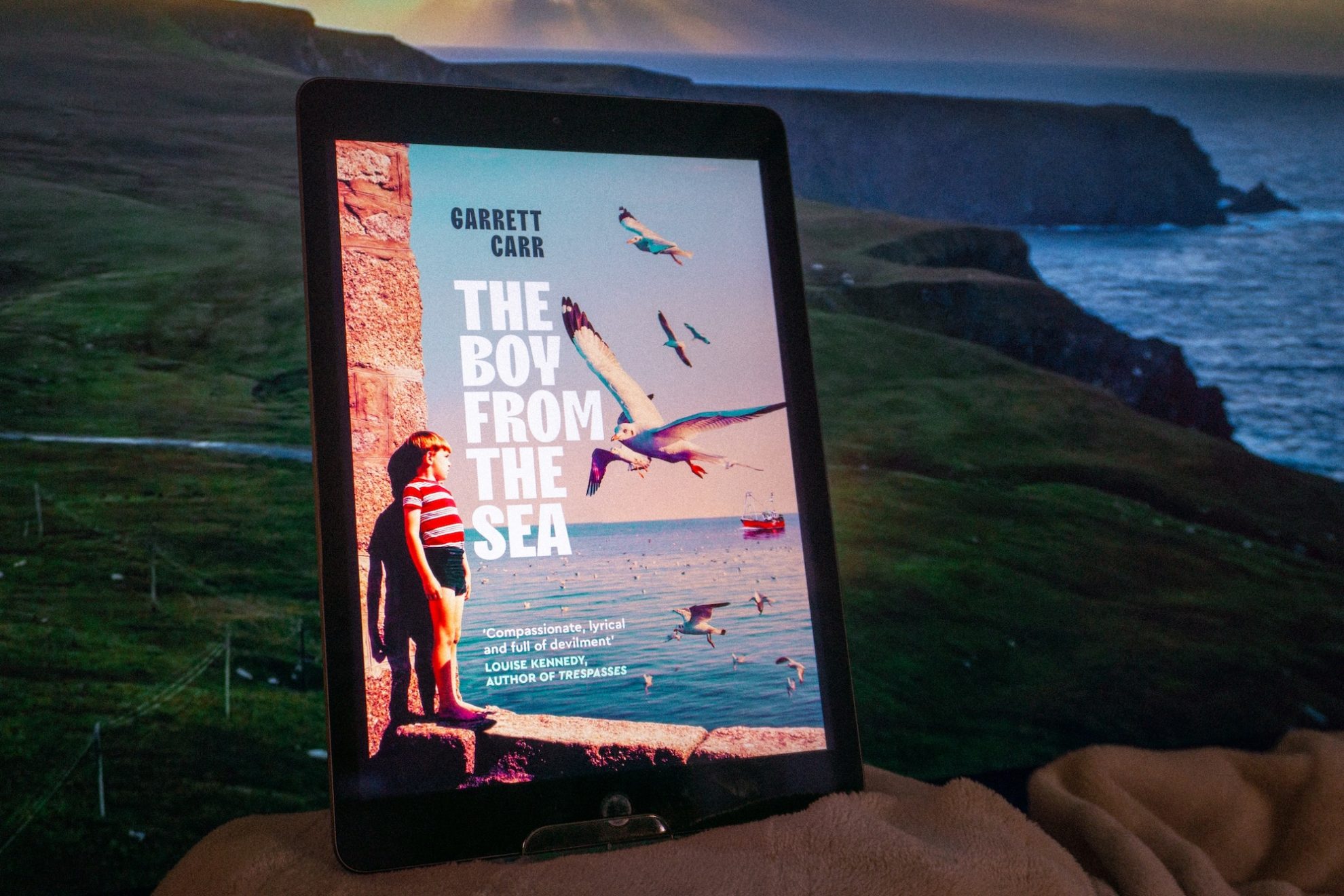
‘You never get free of a place like this,’ he said. ‘If you don’t come back, it comes to find you.’
In a small fishing town on the west coast of Ireland in 1973, life is hard-won and generations are set in stone. The townsfolk know who they are and what they’re about and change seems a far-off possibility that opposes the inevitability of this community and its roots. Until one day, a baby is found abandoned on a beach, prompting whispers of the magic of the sea that could warm even the most steadfast of hearts.
Fisherman Ambrose Bonnar decides to take the baby in, naming him Brendan, and welcoming him into his family. Ambrose’s wife Christine finds love in her heart for little lost Brendan; their toddler son Declan immediately senses a change in the family dynamic which causes a dark and resentful change from within.

The seasons turn and years move along as unrelenting as the tide, pushing the boys further apart as the Bonnars navigate the changing economy and fishing market. Declan becomes angrier and more wild, swinging between knowing his privilege as a biological Bonnar and desperately seeking approval from his father. Meanwhile, Brendan grows increasingly aloof and introspective, always aware of his tenuous position in the family. He takes to wandering the landscape, becoming a sort of quiet confidante to the townsfolk and offering them blessings.
As for Ambrose, he goes through the highs and lows of being a small-time fisherman who knows who he is and what he wants on a base level, but his pride often gets in the way of truly understanding the changing world around him. And Christine is trapped in the confines of being a wife, mother, and daughter—exacerbated by her obstinate and strict father who lives just up the lane with her often curmudgeonly sister.
The Boy From the Sea is poignant and utterly devastating in its slice-of-life portrayal of a bygone era. You feel the constant pull of generational trauma and constraints that keep each character in their own heads. While the years may have changed, you’ll recognize the signs from within your own world: the guilt of aging family; the expectations placed upon gender and generation; the lifelong call of home. The explorations of sibling rivalry, of fathers and sons, of husbands and wives are profound and bittersweet in their truths.

It is wonderfully written and wholly evocative. The language is deceptively layered and compelling, leaving the characters bare on the page; with a wry and omniscient narrator who speaks for the small town, you always feel like you’re watching a predetermined set of events unfold. You cannot change things much like you cannot bear to look away—and just like real life, sometimes all you can do is laugh. That feeling of helplessness and futility will weigh heavy on your mind as the characters seem doomed to repeat the mistakes of their elders. Each observation allows the reader to really feel the vastness of what’s left unsaid, and the pang of missed opportunities for connection.
This book is going to stay with me for a long time. Even as I write this, I feel the soft ache it left behind—and that isn’t a criticism, all the best books do. Books are meant to change you, to shape you, and to heal you, and The Boy From the Sea does all those things and more. I see my own life and family reflected in it; I see the often silent struggles of the generations who came before; I feel the grief and pride and regret; I also feel the hope and love and duty. There is so much life held within this novel, told in such a searingly honest way it’ll capture your heart, just as it has captured mine.
