
The Dreaming is Unraveling
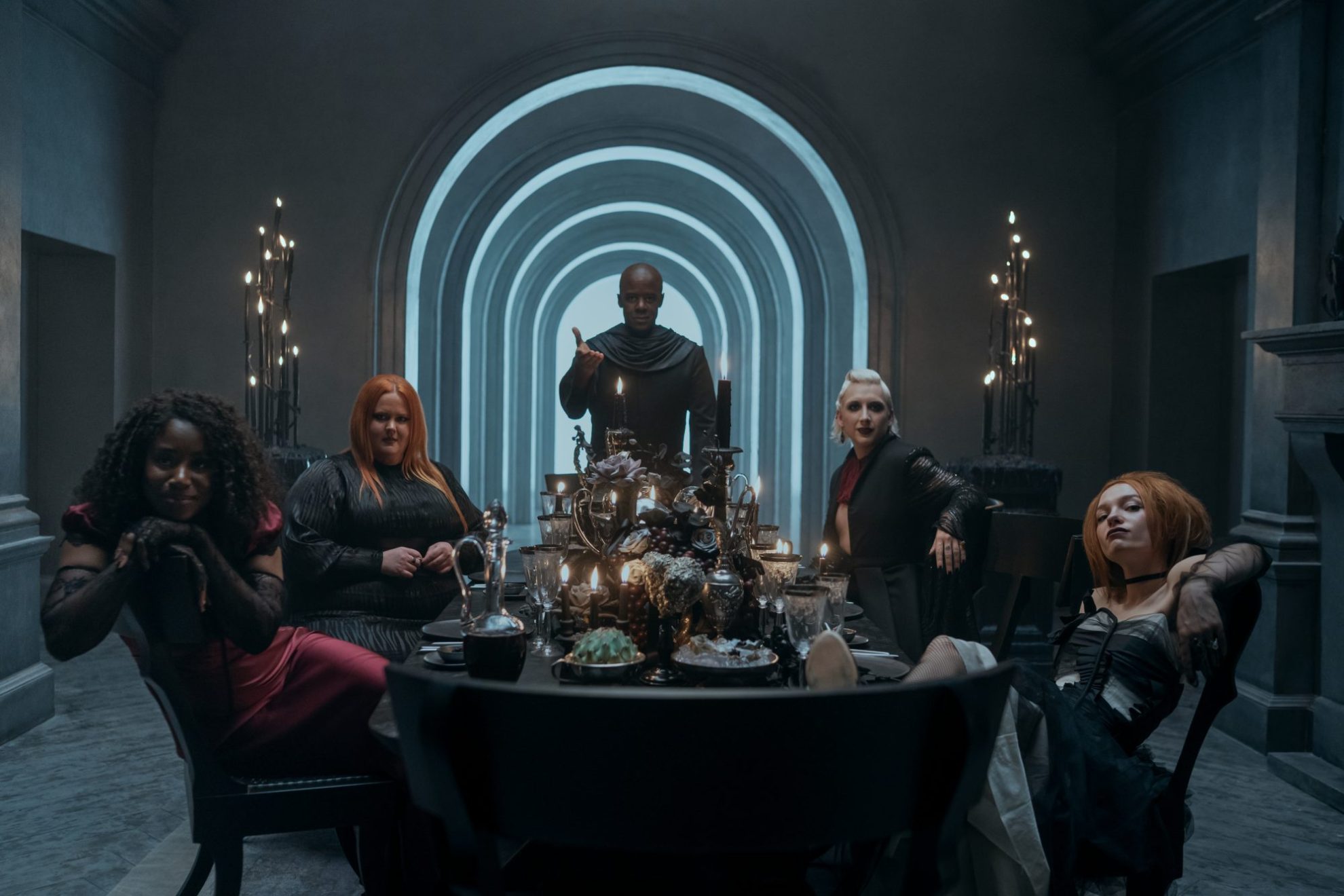
When Destiny (Adrian Lester) fractures, you know the possibilities are endless. Morpheus (Tom Sturridge) stands at the center of a storm of his own making. The season opens with the Dreaming in crisis, not just from external threats, but from the consequences of choices made long ago—choices rooted in pride and coldness. The Endless are facing the loss of Destruction (Barry Sloane), and the rules that once defined their roles and eternal lives together are beginning to warp. The Furies, or Kindly Ones (Dinita Gohil, Nina Wadia, Souad Faress), have been summoned, not by malice—supposedly—but by the ancient law that punishes those who spill family blood. This is the reckoning that has been building since the first episode, and now, there’s nowhere to run, not even The Dreaming.

The Spark That Ignites The Final Act
Loki (Freddie Fox), who resents being forced to owe a favor, finds a means to get back at Morpheus through Daniel Hall, the only child to be conceived in The Dreaming. Loki and Puck (Jack Gleeson), ever the tricksters, are both pawns and players in the cosmic drama. But it’s Puck who sets the game in motion, and he who starts catching feelings. Too bad Loki’s heart, like his Frost Giant kin, is cold. In a moment as mythic as it is terrible, Loki burns away Baby Daniel’s humanity in a literal fire, an act that echoes the myth of Demeter and Demophon. This petty act of vengeance becomes the catalyst that allows Daniel to become the heir to Dream’s empire. Loki’s fury is personal, but the act is alchemic, stripping Daniel of his mortality and preparing him to ascend to the ranks and family dysfunction of The Endless.

The True Heart of the Season is the Truth and Kindness
In this final arc, Morpheus reckons with truth and his lack of compassion for others—especially in the truths he’s avoided. We see this in how he condemned Queen Nada (Umulisa Gahiga) to 10,000 years in the torment of hell and never questioned his decision, although he claimed to love her and did until his final days. His distance from the truth and his own heart show up again when he refuses to help his son, Orpheus (Ruairi O’Connor), petition the court of Hades and Persephone for the life of Eurydice (Ella Rumpf). Morpheus is unkind again in his relationship with Lyta Hall (Ruth Bradley), ignoring not only her rights as a mother but by refusing to tell Lyta the full story of what happened to her son, Daniel.
Dream/Morpheus continues to hide behind the rules of the Dreaming, of the Endless, and his sense of entitlement. This evasion leads to blood on his hands. After centuries of estrangement, Dream finally acts as a father—not by saving Orpheus, but by granting him the mercy of death. It’s an act of love, an uncharacteristic act of kindness, and a final cataclysmic willingness to violate the most sacred law of the Endless: Never spill family blood. Thus, the Furies/Kindly Ones refuse to rest until retribution is paid by Death.


Read our review of The Sandman Season 2 – Part 1 here and see how it began
“A work of dark and mythological enchantment, daring us to face the truths we’d rather avoid and the unkindness that might be our undoing.”
The Second Corinthian
Threaded through all of this is the evolution of the Second Corinthian (Boyd Holbrook), a symbol that Morpheus is not the man he used to be. While the Second is still a nightmare, he is an evolution of the First. This Corinthian is gentle, loyal, and uses his powers not to harm but pragmatically. This leads to his team-up and eventual bond with Johanna Constantine (Jenna Coleman), one of the show’s most intriguing inventions. Their partnership is a meditation on change—perhaps a redemption Morpheus wasn’t able to achieve for himself—and yet he proved even nightmares can grow, and the darkest parts of ourselves can find new purpose. So why not Dreams, even Lords of Dreams?

The Furies are Vengeance
The Three Fates and their avatar, Lyta, are relentless and the Dreaming suffers. A few of our favorite characters are torn apart, like our lovely Fiddler’s Green (Stephen Fry), our grumpy Merv Pumpkinhead (Mark Hamill -voice, Nicholas Anscombe – body). The Fates/Kindly Ones/Furies are not evil; they are inevitable, the cost of breaking of cosmic law. Dream’s avoidance of truth, his inability to admit fault or vulnerability, left wounds that can no longer be ignored. The Dreaming’s destruction proves something The Prodigal, aka Destruction, told Dream and Delirium (Esme Creed-Miles): The show goes on with or without them. That thought is an antidote to Dream’s self-importance and, not only a physical threat, but a metaphor for the consequences of emotional dishonesty and the refusal to change. The Furies’ attack is both punishment and purification, a reckoning that destabilizes the Dreaming, wreaking destruction so that it and its master can be rebuilt.

Death Becomes Her
Heartbreak after heartbreak tumbles through the Dreaming, and the emotional climax arrives in Dream’s final conversation with his beloved sister, Death (Kirby Howell-Baptiste). Death tells Morpheus he could escape the Fates if he wanted, she practically begs him to, but Dream has nothing left to give and no space within himself to change further. He simply says, “I’m tired, my sister.” This is his acceptance that perhaps this version of him has done all it can do. Perhaps through the death of Morpheus, the office of Dream of the Endless might become something better—a being more evolved. For the first time, Dream chooses to end the story rather than shape it to his will. It’s the most honest he’s ever been, and it’s the moment he finally stops running from himself. This scene, gorgeously shot in dark silvery silhouettes, storm clouds, and grey rain, is a meditation on the necessity of endings and the courage it takes to face the culpability, even when the truth hurts.

Is that Jacob Anderson?!
I apologize for interrobanging you, but what in our wildest Dream just happened? After Morpheus’s death, Baby Daniel grows up to be Jacob Anderson, draped in a luscious cream fit, and reborn as the new Dream of the Endless. Girl, what!? Did this happen in the comics? Yup, it did, but it didn’t hit this hard (“The Kindly Ones” – The Sandman issues #57-69). Daniel is not Morpheus, but he is Dream. He carries many of the same memories, but he is a new expression of the office—somewhat like a regeneration in Doctor Who but more of an individual. Daniel is a more compassionate iteration, shaped by forgiveness and an open heart rather than pride and coldness. Anderson is the perfect choice, able to embody both the innocence and the expansive power required for the role, making Daniel’s ascension feel like a true rebirth for the Dreaming.

Funeral for a Friend
Each of The Endless, and many old friends, gather to send the Morpheus version of Dream off into the great beyond. Along side Lucienne (Vivienne Acheampong), almost all of Morpheus’ siblings speak, Destiny, Death, Delirium, Despair (Donna Preston), and notably Desire (Mason Alexander Park) expresses regrets. Just when we despair of seeing Destruction, he arrives like the “best boy” he is, and his presence is especially poignant as he secretly welcomes his new “little brother,” Daniel and gives him the advice Morpheus never listened to. This final goodbye signals a new era for the Endless and a shift in the family’s dynamic, as it did in “The Wake,” the final arc of the original comic series (issues #70–75), which is regarded as one of the most profound and poetic conclusions in comics. That didn’t stop me from yelling at the screen.

What Dreams May Come
The Netflix adaptation ofThe Sandman Season 2 – Part 2 ends the way matters involving tricksters always do. Not with the restoration of the old ways, but with the birth of something new. Morpheus’s death is not a true death—it’s a necessary act of creation, an evolution making space for him to become more than he was. Dream Daniel, and therefor the Dreaming, are transformed the way we all are when we have the strength to change our point of view—or simply to risk an uncertain change. This series, especially the second season, is a work of dark and mythological enchantment, daring us to face the truths we’d rather avoid and the unkindness that might be our undoing. In doing so, every metaphorical ending might become a welcomed change. As The Sandman ends, The Dreaming endures, changed but unbroken, and so do the new worlds we dare to dream and to fight for.
Sleep well, dear ones, and be kind
(because love is the only reason to do anything).

Rating: B+
Level of Enthusiasm: 90%
