
Sofia Coppola loves a gilded cage. Whether it’s Charlotte in Lost in Translation or Jonny Marco in Somewhere, she flocks to sad, wealthy people (typically white women, to be exact) in hells of their own making. The genius of Coppola is how she’s able to cultivate sympathy for her protagonists, time and time again, despite the fact her characters are in situations many would do anything to be in themselves.
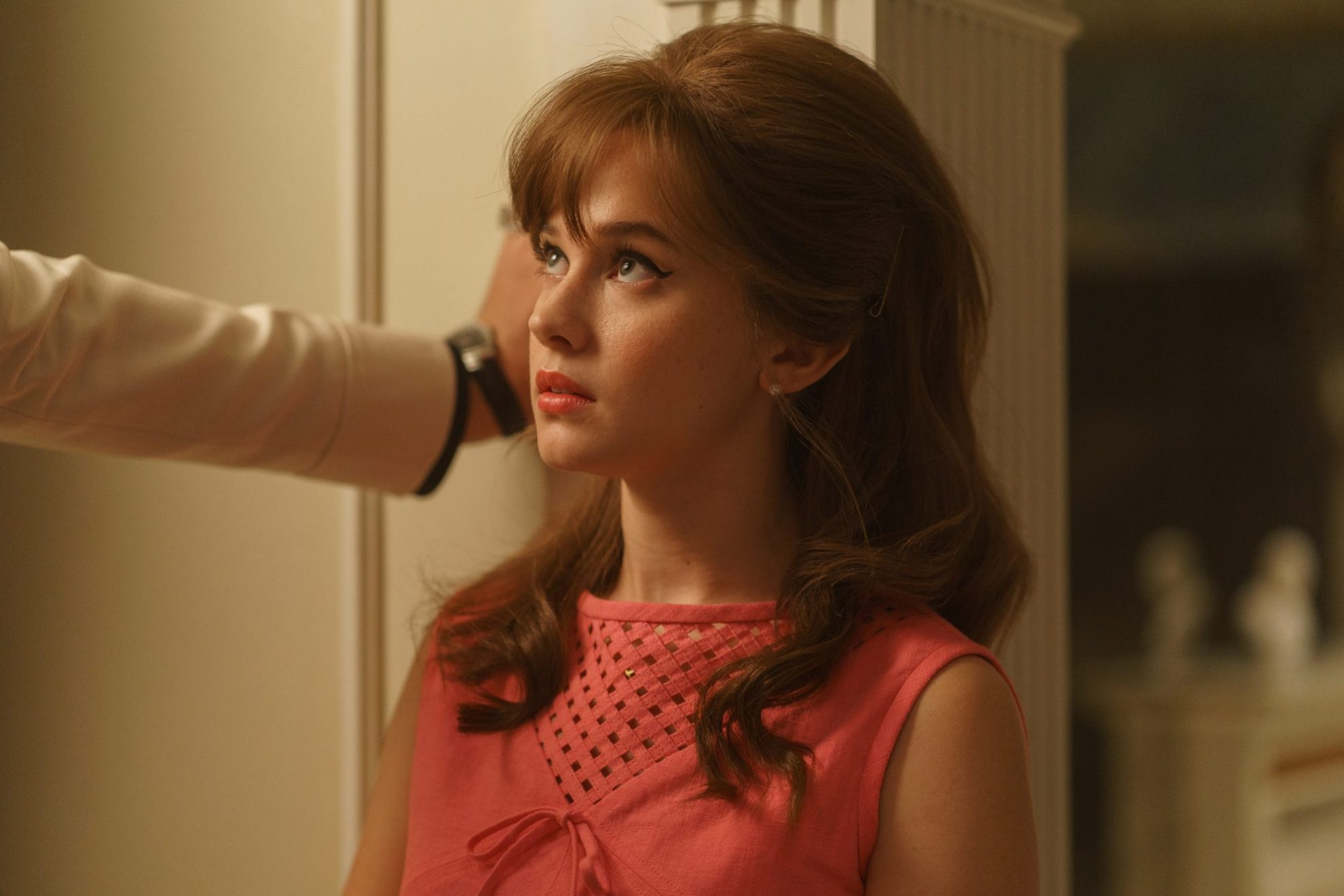
So goes much of Priscilla. Adapted from Priscilla Presley’s autobiography, Elvis and Me, Coppola’s version (which she wrote and directed) traces the storied, troubled love story between the King (Jacob Elordi) and his queen (Cailee Spaeny). As evidenced in its title, this story is squarely told through Priscilla’s eyes — a point hammered home by an opening sequence oriented around glimpses of her dolling herself for the day, Aqua Net and winged eyeliner included.
It’s not just those fleeting glances that help Priscilla start as a dream. As a 14-year-old stationed with her family in 1959 West Germany, Priscilla is already well aware of Elvis’ status as the King. A chance meeting with one of Elvis’ military friends who is doing some recruiting of his own — ostensibly tasked with finding girls for the King while he’s overseas. Despite her naivety and overwhelming childlike looks, Priscilla immediately realizes the opportunity in front of her: It’s a chance to break from the decidedly dreary and drab existence she’s otherwise living and to find herself swept up in a fantasy.
The dalliance between the two begins as she imagined; they fall in love quickly, with trips to the movies and other dates around town. Any sort of intimate moment only goes so far with Elvis setting boundaries (the first inkling of what he will or won’t allow her to do) concerning their sex life. It’s otherwise ideallic existence. Priscilla’s not shy about speaking her truth, however, stating that he’ll forget about her when he leaves — a moment that feels like it’ll come true when she’s left amongst the masses of his fans outside an airport when his tenure in Germany concludes. Priscilla daydreams and yearns for him until her hopes come true, and she’s whisked off to Graceland under the pretense that she’ll be watched over and allowed to finish her schooling.

That pretext dissipates in short order. Not long after Priscilla arrives in the US, she embraces Elvis’ lifestyle, whether it’s drinking and gambling in Vegas or taking pills. She even lets him dictate what she wears and her appearance — “…black hair and more eye makeup will make your eyes stand out more,” he declares at one point before making a statement about how patterned dresses don’t suit her. It goes a step further when Elvis heads out on trips, whether to film a movie or go on tour, as he tells Priscilla to “keep the home fires burning,” reducing her to part of the tapestry of Graceland. She’s a ghost, haunting the house until she’s allowed to life on his watch (he notably states she’s not allowed to bring friends back to Graceland for fear of interlopers).
Coppola renders these moments where Priscilla waits and lingers with a deep melancholy, naturally evoking Charlotte peering out of her Park Hyatt Tokyo window during Lost in Translation. The dream Priscilla once imagined becomes more nightmarish, intensified by Elvis’ rage issues. The director makes these moments all the more heightened by the literal difference in stature between Elordi and Spaeny; his towering 6’5” frame compared to her 5”1” tininess makes for quite the visual metaphor for how much air space The King occupies at a given time.

The two are electric in their respective roles, and I’m honestly at a loss as to who I like more. As Nate Jacobs in Euphoria, Elordi plays the rageful side of The King with ease, but it’s the quiet charm that stands out considerably. It’s a rope-a-dope, luring Priscilla and the audience into a false sense of security and comfort before snarling and lashing out like a tiger before being sweet once more. It’s a performance full of juxtapositions, where you can understand why she would stick with him far longer than she should have otherwise. Speaking of: Spaeny, who made a deep impression during Alex Garland’s underseen and underappreciated series Devs, is a revelation here. As boisterous as Elordi’s Elvis is, she plays Priscilla as decidedly quiet but never meek. Every look Spaeny conveys is full of steely resilience, an astonishing personification of silence speaking volumes. This fortitude goes a long way in ensuring that she is never a victim while still rendering the film with an overwhelming amount of sadness.
The only thing that doesn’t quite work is how sweeping the film’s third act becomes as it jumps from one moment in time to another at a slightly disorienting rate (handfuls of years often pass between cuts in a way that’s a touch disorienting). That slight speed bump aside, Coppola’s direction remains as strong as ever, even with this project charting some similar territory as her previous works. What makes Priscilla stand out, however, is how adept she is at pulling all of the disparate threads of old into a result that feels like someone operating at their absolute best. To use a basketball metaphor, it never gets old seeing Steph Curry hit an insane three-pointer because he’s the best at doing it. It’s the same with Sofia. Watching her nail this execution is always a joy.
Toward the ending of Priscilla, a lyric from Boygenius’ (the indie rock supergroup consisting of Julien Baker, Phoebe Bridgers, and Lucy Dacus) “True Blue” rung out in my head: “When you don’t know who you are, you fuck around and find out.” That sentiment is the thesis for a lot of Coppola’s work but it feels all the more appropriate here. For much of her life, Priscilla found herself defined by her relationship to The King. In the film’s final moments, Coppola allows her to be so much more than that. She’s simply herself.
