
It’s wild how something that used to seem so recent is actually a long time ago. Time moves very, very fast at times, even when the art and culture you love feel frozen in amber. Yet when you sit back and remember, you can feel how quaint and simpler it was. Now, twenty years back, the world of recorded music was completely different. MTV still played music videos and still mattered to youth culture compared to the husk it is now playing Ridiculousness on repeat all day. Napster destroyed the music business, but the iTunes store still allowed people to make money with music, and the radio was still something that could make a hit record. It was a time when a new British Invasion started in nineteen ninety-seven with the Spice Girls had now diversified with Blur, Oasis, and other Rock bands hit. Still, the club music and the first experiment of Grime in the US started to shake things up. In all that, there was one petite lady with a fantastic, soulful voice who seemed to come out of nowhere. That woman, Amy Winehouse, with her songs about falling in Love, heartbreak, frustration, dealing with Her vices, and Love of Hip Hop, set her apart and changed the Pop Music scene forever. I’ll be honest with you: I didn’t know about her with Frank; I had to discover that later after I heard You Know I’m No Good remix with Ghostface Killah spitting on it and had to find out who this was with Toney Starks on the song with her. From there, my fandom was set and she had a locked place on my iPod 3 through to now on my iPhone.

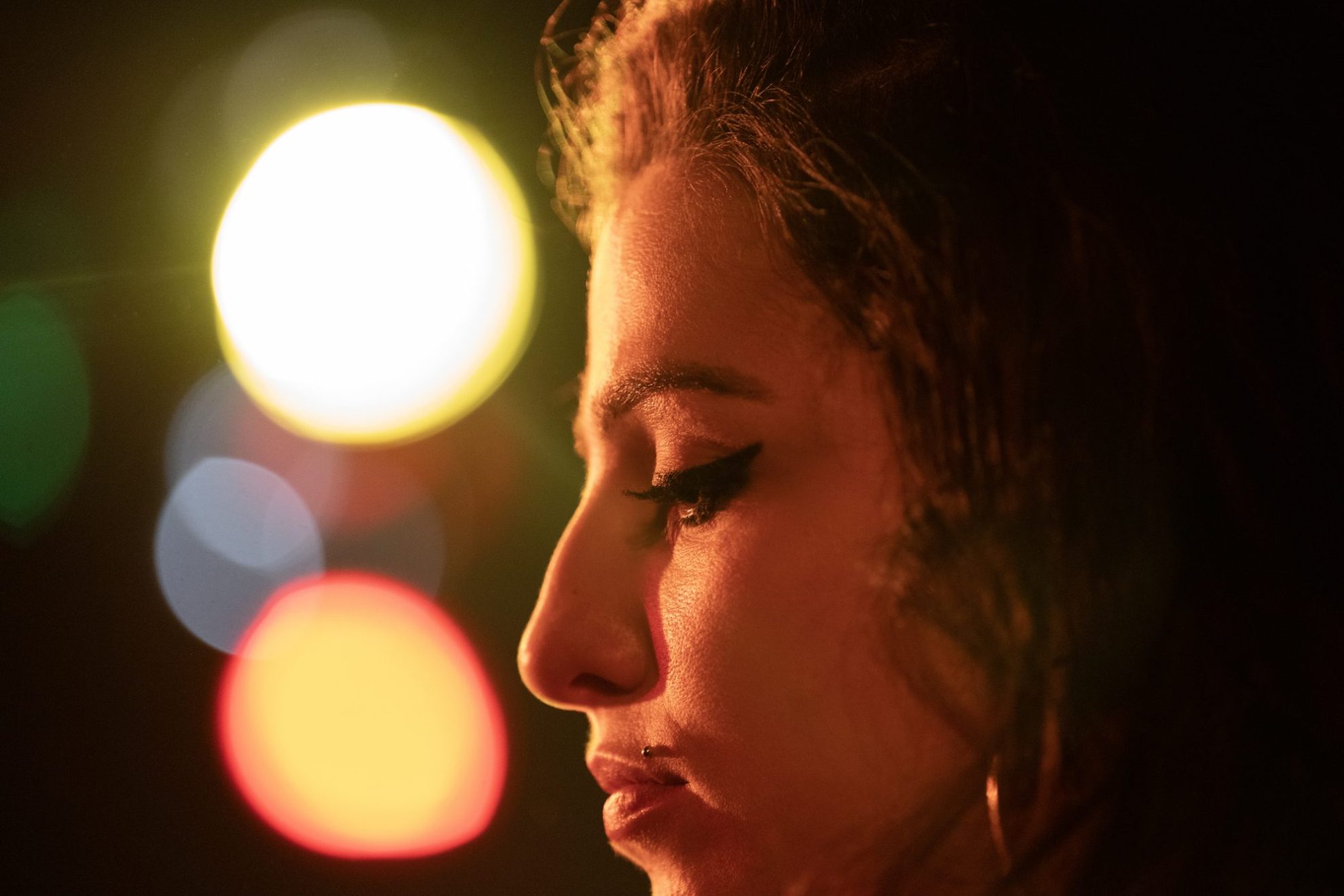
As Amy Winehouse had a tragic ending to her life, this isn’t the first cinematic time they’ve told her story. For me, the fantastic documentary Amy in 2015 was the perfect way to tell the story of her young life. Yet, with a celebrity, especially a musician, it’s ideal for someone to want to make a biopic. So here, a little more than twenty years after her debut, we have Back to Black, which tells the story of Amy from when she got signed through to close to her end. Marisa Abela stars as Amy and does the singing in the film. She does a good job with some shakiness in the early parts, as I felt she was trying to do all the little body tics Amy had when performing and singing. Throughout the film, she eases a bit more into the performance. She also does very well singing, and while she doesn’t sound precisely like Amy did, it’s really close, and you can feel the effort – she is singing. Now let me get to the other performance that stood out here: Jack O’Connell as Blake Fielder-Civil. Now, I don’t like Blake, and I think he’s terrible. He’s a goofy-looking, sickly-looking man; at least he did back in the 2000s. He looked and acted as a bad influence publically on Amy. You sit back and see how much she was in Love with this man, and you’re wondering why and how. Yet this film, with this actor Jack O’Connell, plays it in a way you get it. You understand how she fell so deeply in Love with this man. Now it helps that this actor is like 1000 percent more handsome than this guy with rizz oozing out of the screen like a Double Dare episode. He has so much swag and coolness it literally took me out of the movie cause I’m like, Blake wasn’t this guy. This guy is from a movie. Like, of course, she’s going to be heartbroken by this man. This actor deserves credit for making people who actually know something about Amy’s life to actually kind of like this man. I’ve seen him in other things, but now he’s unforgettable after this.

Now, before I go on, there is another performance that I think for me explains the issues I have with the film. Eddie Marsan plays Mitch Winehouse – Amy’s father. Marsan is a well-known actor; if you don’t know his name, you’ve seen this man’s face as he’s a great character actor, blending into the story with believable characters that fit the world you’re watching. So the problem isn’t him; it’s Mitch. Now I feel, at least from my perspective, that Mitch wasn’t always the best figure in Amy’s life either from this outside perspective. He’s a flawed person in this tale and he’s a person to empathize with as he lost his daughter. Yet, in this film, this man is portrayed as a saint and a perfect father. Now, that might be up for debate, but you can’t debate the fact that he’s an amazing movie dad. This is a symptom of many other things the film does concerning Amy’s story and who is telling this story. The film, in showing her relationship with Blake, makes it a point to show her more physically abusive to him in a way showing her as the more terrible person in the relationship instead of what I feel as showing it with more nuance of both of their mindstate while being high. The film mostly ignores any friendships she might have had before Blake and during her entire career, with only a few shots of her with some nameless friends.

The film also doesn’t have a person to portray Mark Ronson, the producer, who’s a significant factor in creating her landmark second album. I can only assume he didn’t want to be in this film. With no Ronson and a kind of missing piece of her story of creating that album, it also connects to another thing I have a problem with: Where are her connections to Black American music? Other than having her Nan talk about the past and of the stylings of the 60s and that look her working with The Dap Kings is shown to be nothing more than them as background dancers and singers and not a major contributor to the sound of Back to Black and other than a small cameo Salaam Remi is just not there. If you don’t know who he is and what he means to her in making music, the five seconds she’s on-screen with him lacks any real point. Her music was so tied to Mid 20th-century Black American music, much like the British artists of the 60s who were influenced and inspired (and some stole) before her. Her use of the style of the Ronettes and Motown-like harmonies and arrangements, thanks to Ronson and The Dap Kings, made this retro feeling new music mixed with her lyrics complaining about missing a Nas concert and smoking weed. The Nas thing too, is vital as Remi is one of his main Producers; there’s a literal musical connection between her and Black music of that time. It’s this connection that she talked about and was open about as she wasn’t at the time thought of as appropriating anything, she paid homage, and she could sing her ass off. This respect and homage are entirely absent in the film telling her story, which is incredibly disappointing.

So do I think people should go and see this film? It’s honestly hard to say. After walking out of the film the film feels like Whitney Houston: I Wanna Dance with Somebody. That film is about another musician, but here’s the difference: while both take great liberties, the performances and filmmaking are better overall. These folks tried harder, in my opinion, and it shows. You could show this film to someone who doesn’t know much about her work, especially someone younger who missed all this, but I think if you do, then also show them the documentary Amy for a better, more precise and honest film telling her story. Back to Black makes a great effort to tell Amy Winehouse’s life story but makes choices that don’t honor her as well as it should.
Score: C
