
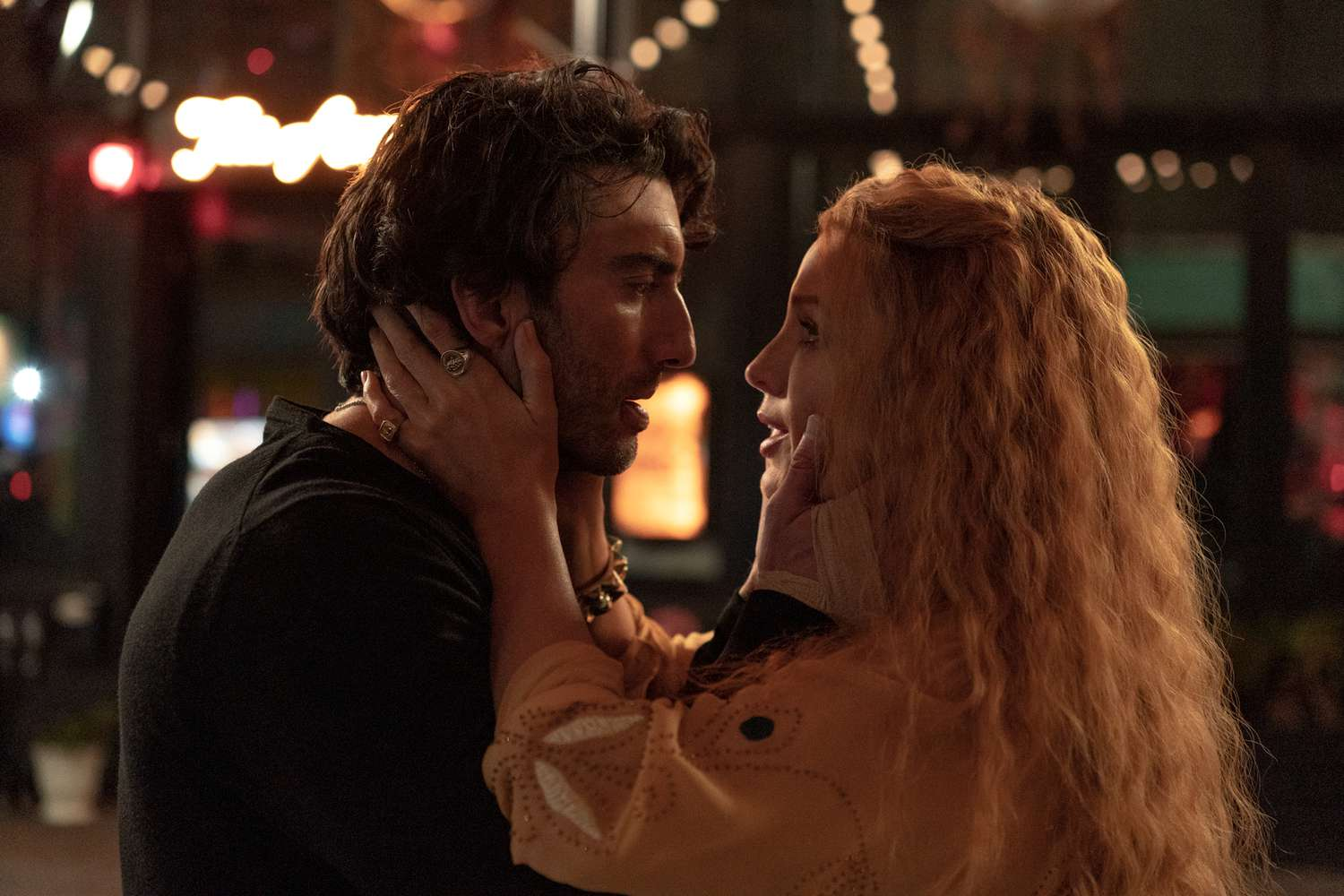
It Ends With Us, based on Colleen Hoover’s best-selling 2016 novel, has finally made its way to theaters, directed by Justin Baldoni and starring Blake Lively, Justin Baldoni, and Brandon Sklenar. This film, rooted deeply in contemporary romance literature, brings to life a story that is as much about love and resilience as it is about the complexities of human relationships and the scars they leave behind.
Hoover’s novel, inspired by her own experiences, particularly her mother’s escape from abuse, lays a powerful foundation that the movie attempts to build on with a mix of success and flatness. Our point of view comes from Lily Bloom (Blake Lively) as she starts a new life in Boston. On the night of her father’s funeral, she’s struggling with unresolved feelings we can guess about from the title.
While having a smoke on the rooftop of an upscale apartment building, Lily meets a volatile neurosurgeon, Ryle Kincaid (Justin Baldoni)—but let’s call him Kylo Ryle because I called him Dr. Kylo Ren throughout the movie. Lily and Kylo Ryle almost fall. Not off the roof, but for each other. Until the hospital calls him in for a surgery and they part. Seemingly for good. Maybe that’s a good thing. There’s something about Ryle that’s too intense, and yet he’s so sweet. It’s an unsettling dichotomy. Can we trust him? Once again, the film’s title is our answer.

When Lily realizes her dream of opening a florist shop, she meets a bored and highly fashionable hype-beauty, Allysa (Jenny Slate). Lily gains a new friend, but it comes with attachments. Kylo Ryle returns. While new relationships grow, Lily remembers her first love, Atlas Corrigan (Brandon Sklenar), in a series of flashbacks. The pain of her past and the uncertainty of her present collide, forcing Lily to confront generational trauma.
But the movie ends abruptly, and you wonder why. Fans of the novel will know the story doesn’t end here. Hoover’s sequel, It Starts With Us, continues Lily’s story, and the abrupt ending here hints there might be a continuation on screen too.
This is a very pretty movie. If a book were to open up its pages and pull you in, you see it here. The set design by Carrie Stewart makes me want to visit every location, while the costuming tells us exactly who each character is before any dialogue is spoken. Applause for Eric Daman.

Baldoni’s portrayal of Ryle is particularly effective; his character shifts between charm and volatility. Thus It Ends With Us is infused with a dynamic of emotional manipulation. I didn’t know how I was meant to feel—until it became disquietingly clear. This aspect of the movie must be spoken about because it illustrates that what feels like romance can actually be mistreatment, exposing the insidious nature of abusive relationships. There’s a sensitivity here that I appreciate.
Lively is lovely, capturing Lily’s vulnerability and resilience seamlessly. There’s something magnetic and tangible about her performance. Baldoni balances his roles as director and actor, and Sklenar’s Atlas is a classic romance hero—as gentle as he is ready to fight. But my favorite is Slate; her Allysa is a true friend, fully rounded by supportiveness, astute advice, and hilarity.
The characters and their emotional truths prop the movie up, but it’s lacking something, perhaps a greater depth. So much of It Ends With Us feels like an appetizer for a meal that is never served.

