
Going into the newest take on The Lion King, Jake Coyle from AP describes my thoughts best, “On the one hand, you have the Oscar-winning, 45-year-old director (Barry Jenkins) of some of the most luminous and lyrical films of the past decade. On the other, you have the intellectual property imperatives of today’s Hollywood. What happens when they collide?”
When Disney announced Mufasa: The Lion King a few years ago, I wondered why Barry Jenkins would want to create a prequel in the same style Jon Favreau used for the 2019 The Lion King remake. Animation fans, like me, found that film flat despite its talent-heavy director and cast, alongside the pop-culture-making score. The lions felt too much like voiceovers in a National Geographic expose on The Truth behind Pride Rock. The benefit of animation is its ability to take true-to-life forms and stylize them, stretching faces and bodies unrealistically but effectively to enhance the action or emotional impact. That emotive quality was missing from the overly realistic 2019 retelling and the storytelling suffered for it.
Jenkins is also known for the shading and filtering of light that is almost his fingerprint, and his films feature specific color palettes the way classical artists have eras/periods in their work. His gorgeously emotional adaptations about young adults in pivotal upheavals that overtake their lives are another unmistakable facet of his craft. Thinking about that sparks a realization: Mufasa is a movie about a young chosen one, who is displaced from his family by an experience that leaves him with a fear of water, but is transported by that water to his destiny and a brotherhood that will be tested. If Mufasa (Aaron Pierre) isn’t Moses and Taka (Kelvin Harrison Jr.) isn’t Ramses, and you don’t recognize that folkloric evolution into adulthood as utterly Barry Jenkins then you haven’t seen this movie yet (or The Ten Commandments). You should fix that on Friday.

© 2024 Disney Enterprises Inc. All Rights
Mufasa: The Lion King took all the notes and returns with new mythology, a hero’s tale, that sings to the legends of the original movie and the Broadway musical. Honestly, it shocked me. After watching the trailers, I was worried this story would stomp on the legend of our beloved Mufasa by making him a villain in his own story and redeeming the traitorous Scar aka Taka. I should have known Jenkins would never disgrace the name of our good king. Instead, he brings in writer Jeff Nathanson who crafts a new and loving lore surrounding an average lion’s rise to rule through merit. What!? Yes, merit, perseverance, and found family. We’re talking a true hero here, y’all. Joining in to enhance the impact of this story is Lin-Manuel Miranda, who lives up to his biography by penning a score that’s witty and catchy, while it moves us and the story forward with believable emotional beats. Yet, the music somehow doesn’t scream Lin-Manuel but flows seamlessly with the world of the Pride Lands.
My favorite song is the villain’s theme “Bye Bye” crooned with malicious glee by thee Mads Mikkelsen as Kiros, the white lion King of The Outsiders. Those with sharp eyes for themes will recognize the layers in The Outsiders and their white fur—the Kimba the White Lion anime and colonialism are high among them. Another pop-culture reference comes from a surprise allusion to The Lord of the Rings when Rafiki finds his staff as a true wizard always does. Perhaps the best allusions are inhouse: Kiros glancing at his claws the way Scar will in the future, or the repetition of “he/they live in you” and other visuals that will have you grinning if you’re a fan of The Lion King franchise. Out of the callbacks, the most impactful one is the moment of truth between Mufasa and Taka, that pivotal chance comes three times, twice in Mufasa: The Lion King and once in the original, and each time Taka/Scar must once again choose who he wants to be.


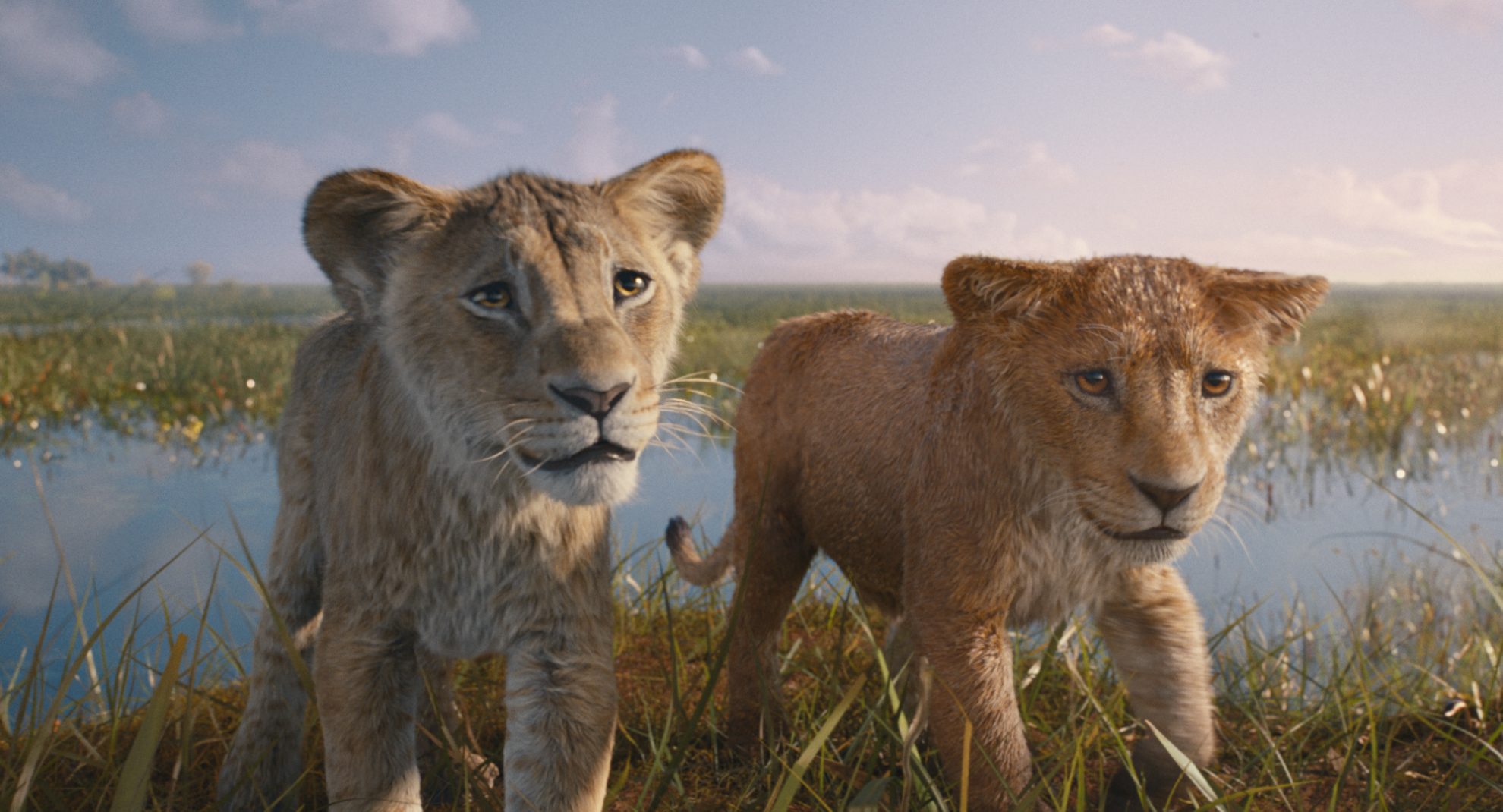
Other themes remain true to every iteration of The Lion King, revenge, loss, escape, nobility in choice, and finding love in unexpected places. It’s all there, and the combination of Jenkin’s directing, Nathanson’s pen, Miranda’s music, and the Visual Effects Team gives the story life. No matter what species, each character emotes in realistic ways that never shift to cartoony. That is a feat because it allows us to submerge into this world with full believability. The landscapes and occasional moments of fantasy are great, too.
All of this allows the cast to create the kind of warmly available characters we want to populate our bedtime stories. Pierre and Harrison Jr. formed a brotherly bond while filming Genius: MLK/X for National Geographic, and they recorded their parts while shooting the show. Being there in the recording studio together, bonding as real-life friends, comes out in performances Pierre and Harrison’s performances. Pierre has a timbre that matches well with Mufasa originator James Earl Jones (look out for a tribute before the movie starts), and Harrison’s range slides effortlessly through every shade from Taka to Scar. Tiffany Boone takes over for the late Madge Sinclair as young Sarabi. John Kani voiced Rafiki in 2019. He returns here taking up the staff from Robert Guillaume, and is joined by Kagiso Lediga as the younger version. There are many more fabulous performances in this film, but I need y’all to give a standing ovation to Blue Ivy Carter in her debut. Her Kiara is faceted and dimensional and so good. And finally Keith David the only man with a Metatron level voice like Jones, comes in as Masego, Mufasa’s father.
Disney is already having another great moment in animation with Moana 2. Mufasa: The Lion King lives up to the lore and adds more enchantment to the legend, making it everything we want from a return to Pride Rock.
Bravo, Barry Jenkins.
