
Do you like sauce? Before Mickey 17, I liked it on every meal. Not anymore. The latest sci-fi fable from director Bong Joon Ho—based on the novel Mickey7 by Edward Ashton—makes me doubt the innocence of sauce. I have a good reason. Whether it’s the aegyo/cuteness of the super-pig in Okja, the cricket protein bars in Snowpiercer, or the steak added to the jjapaguri instant noodles in Parasite, in a Bong Joon Ho film, corruption is on the plate, and consumption is the appetizer for destruction.
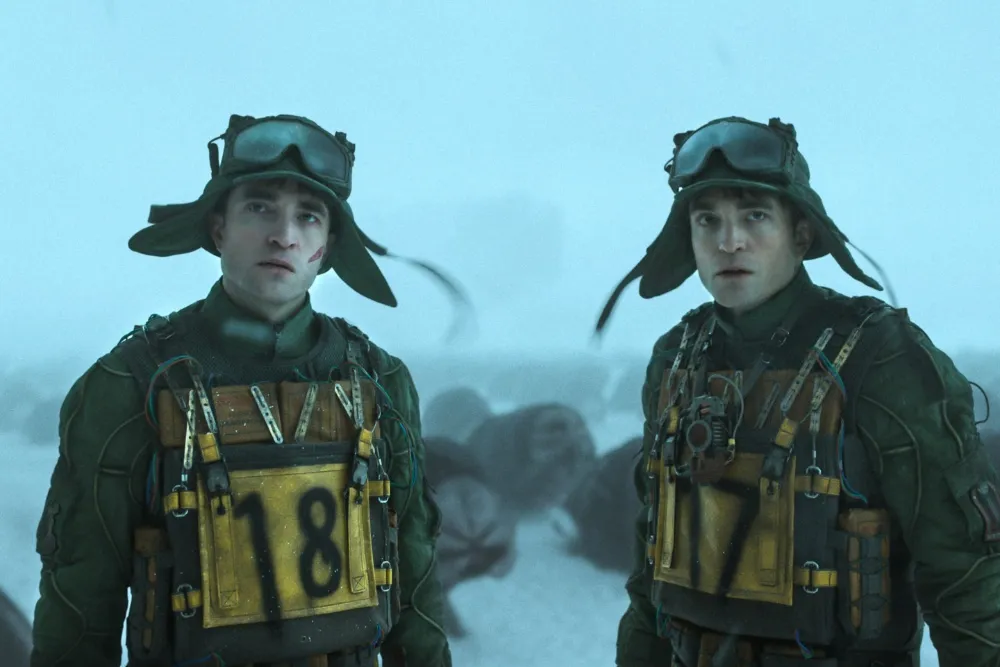
Much like Director Bong’s previous projects, Mickey 17 is a work of absurdist social commentary with razor-edge humor. In it, Mickey Barnes (Robert Pattinson) gets tricked into a bad business deal by his friend Timo (Steven Yeun). When the loan sharks start circling, he jumps on a space expedition led by the failed politician Kenneth Marshall (Mark Ruffalo) and his co-dependent wife Ylfa (Toni Collette). Only Mickey doesn’t read the fine print and signs up for several consecutive life sentences as an Expendable. The mad scientists on the ship scan his body and brain, and whenever their experiments kill him, they print another Mickey out, reupload his consciousness, and start killing him again. Until they get to 17. After 17 is abandoned to freeze to death, he meets a herd of woolly mammoth-pillbug-tardigrade creatures called Creepers, and the man who dies for a living comes to life.

Oh, and Mickey 17 is a comedy. And a satire. And kind of romantic. The only person in the universe who cares about Mickey is Nasha (Naomi Ackie), a security specialist and danger girl who gets more interesting and heroic the more she’s on screen. Nasha is happy when Mickey doesn’t die and happier when the scientists mistakenly print another one, but Mickey 18 is built differently. 17 is gentle with a sharp tongue. 18 is perpetually furious and quick with his fiss. They’re both Mickey, but from different lifelines with their own motivations, and they both want to live. Nasha would be even happier with her polyamorous throuple pod, but it’s illegal. Punishable by eradication, even on far flung outpost planets where colonization is the goal. And just like that, the inciting incident arrives.
For me, it’s always a good day for any sub-genre of sci-fi, including Bong, Besson, The Wachowskis, Jeunet, Proyas, Watanabe, and most of the usual suspects that make us think, laugh, shudder, or star gaze with wonder. Imagine if The Fifth Element walked up and wanted to talk about the dangers of capitalism made so rampant that we take it to other planets. Or if Delicatessen (1991) continued to examine the darkly quirky rules of survival but added a conversation about the demeaning nature of the colonial mindset. And if you haven’t seen those movies or Okja or Snowpiercer, Mickey 17 is about class and how the phrase “eat the rich” evolved because the wealthy devoured the workers first. For instance, Colette’s Ylfa is obsessed with a condiment she calls “sauce”—no other name—but it’s always crimson red and seasoned with death. This is a film about imperialism bloated by entitlement, but also how nature and experience conspire to make every person an individual—even when they’re a clone. And it’s about the loyalty and acceptance that comes from pure love.

Mickey 17 isn’t the movie that Parasite is, it’s not meant to be. Yet we see the same levels of surreal but believable production design—this time by Fiona Crombie, editing by Jinmo Yang, and cinematography by Darius Khondji. There’s a similar compassion for those trapped under the boot of a voracious and consumptive ruling class, the casual cruelty that burns like acid because it comes too easy, and the humor that punches you in the kidneys as much as it makes you laugh.
Bong Joon Ho makes fractured fairytales for the thinkers and dreamers, but it’s never the same unnervingly sweet yet frightening tale twice. That’s what makes having him crack your brain open such an odd but appealing experience. It’s also why I’m good with gravy, jus, salad dressing, hollandaise, or béchamel, but because of Mickey 17, “sauce” is forever sinister.

